
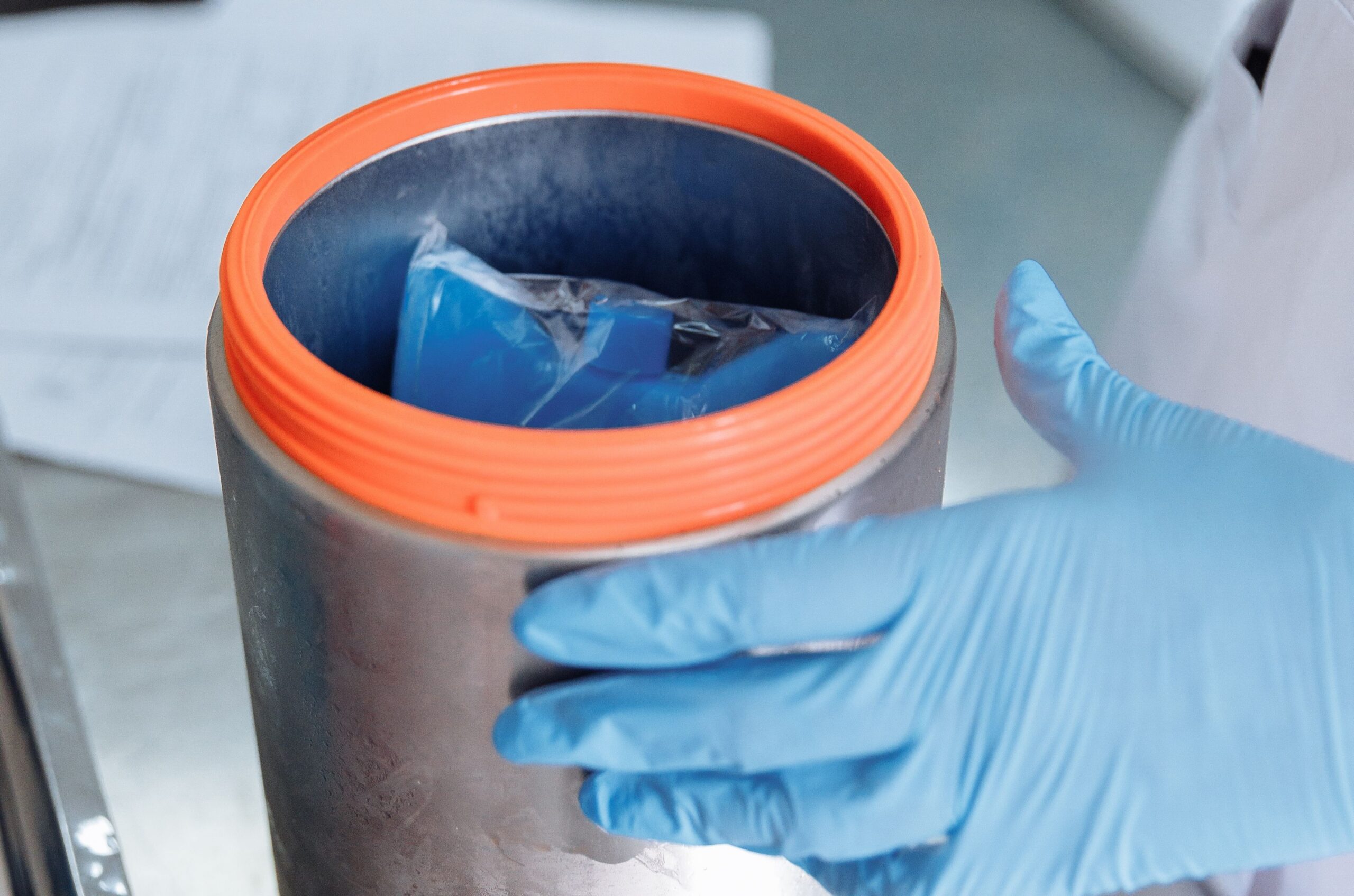
Buying a liquid nitrogen dewar without knowing which type you actually need is how labs end up with equipment that is either the wrong shape for the job or quietly losing more product to boil-off than anyone budgeted for.
Dewars are not interchangeable. A container built for static storage behaves differently than one built for dispensing, and a dry shipper does a job neither of the other two can do at all.
This guide covers the three dewar types in practical use, how to size one against your actual daily consumption, why boil-off means no dewar holds its charge forever, and when occasional fills stop making sense compared to a scheduled delivery program.
The Three Dewar Types You Will Run Into
Storage dewars are the simplest category: a vacuum-insulated vessel that holds liquid nitrogen in reserve, typically accessed by dipping or pouring rather than built-in dispensing hardware. They are the default for labs that need a nitrogen supply on hand without frequent, controlled dispensing.
Liquid withdrawal dewars add a pressure-build and withdrawal system, so liquid nitrogen can be dispensed through a valve under its own vapor pressure instead of being poured. This matters anywhere nitrogen needs to be measured out repeatedly and precisely, such as feeding a piece of lab equipment or a cryopreservation workflow.
Dry shippers are a different category entirely. They absorb liquid nitrogen into an internal absorbent material, so the unit holds cryogenic temperature in vapor phase with no free liquid inside. That makes them the only one of the three rated for air transport, and the standard choice for shipping biological samples that need to stay below -150°C in transit.
Which type a given operation actually needs usually comes down to one question: does the nitrogen need to leave the building, or just stay available inside it. A lab shipping samples to a partner site needs a dry shipper. A lab consuming nitrogen entirely on premises almost always needs a storage or withdrawal dewar instead, and buying a dry shipper for that job is paying for transport-rated engineering nobody is using.
Sizing a Dewar to Your Daily Consumption
The right dewar size is a function of two numbers: how much liquid nitrogen your operation actually consumes day to day, and how much headroom you want before the next fill. Undersizing means more frequent fills and a higher chance of running dry mid-week. Oversizing means paying for a larger vessel and more boil-off loss than your actual usage justifies, since every dewar loses a small percentage of its contents daily regardless of whether any is withdrawn.
Labs and clinics with steady daily draw, such as cryopreservation operations running continuous sample intake, generally do better with a larger dewar on a scheduled fill cadence. Operations with occasional or bursty demand often do better with a smaller unit refilled as needed, since the smaller the dewar, the less is lost to boil-off while sitting mostly full.
Boil-Off and Holding Time: Why No Dewar Holds Forever
Liquid nitrogen boils at -196°C, roughly -320°F, and every dewar on the market is built around managing how slowly it reaches that boiling point from the outside in, not stopping it entirely. Vacuum-jacketed walls reduce heat transfer dramatically, but they do not eliminate it, so a small, constant trickle of liquid nitrogen vaporizes and vents through the dewar’s pressure relief system as a matter of normal operation.
That venting is boil-off, and it is the reason holding time is always a range, not a fixed number: ambient temperature, how often the dewar is opened, and how full it is all change how fast that trickle adds up.
Purdue University’s environmental health and safety guidance notes that excessive venting or unusual ice buildup on a dewar can signal vessel failure rather than normal boil-off, which is worth knowing before you assume a faster-than-expected drop in level is just bad luck. A dewar that is losing product noticeably faster than its rated boil-off rate should be inspected, not simply refilled more often.
Safe Storage and Handling
Liquid nitrogen expands roughly 700 times in volume as it vaporizes, and in a small or poorly ventilated room, that expansion can displace enough oxygen to become a genuine asphyxiation hazard well before anyone smells or sees a warning sign, since nitrogen gas itself is odorless and invisible. Purdue EHS treats oxygen levels below 19.5 percent as hazardous and recommends storing and using dewars only in well-ventilated areas, with cryogenic-rated gloves and a face shield for anyone handling an open transfer. A storeroom that holds a dewar alongside other equipment should have that ventilation question answered before the dewar moves in, not after someone notices the room feels off.
From Occasional Fills to Scheduled Delivery
A lab filling a dewar sporadically, whenever it happens to run low, eventually hits the same wall every growing operation does: the fill schedule stops lining up with actual consumption, and someone ends up placing an urgent order at the worst possible time. Moving to a scheduled delivery program solves this by matching fill frequency to measured consumption instead of to whoever remembers to check the level gauge. It is a small operational change that tends to pay for itself the first time it prevents a dewar from running dry mid-protocol.
What AdChem Supplies
AdChem supplies the liquid nitrogen to charge a dewar or dry shipper you already operate, delivered on a one-time or scheduled basis depending on your consumption. If you are sizing a new dewar or weighing storage against withdrawal equipment for the first time, loop in the equipment manufacturer on compatible fill volumes, and loop in AdChem on how often it actually needs to be charged.
Request a quote with your dewar capacity and typical consumption, or contact AdChem directly to talk through a scheduled delivery cadence that matches how your lab actually uses nitrogen.