
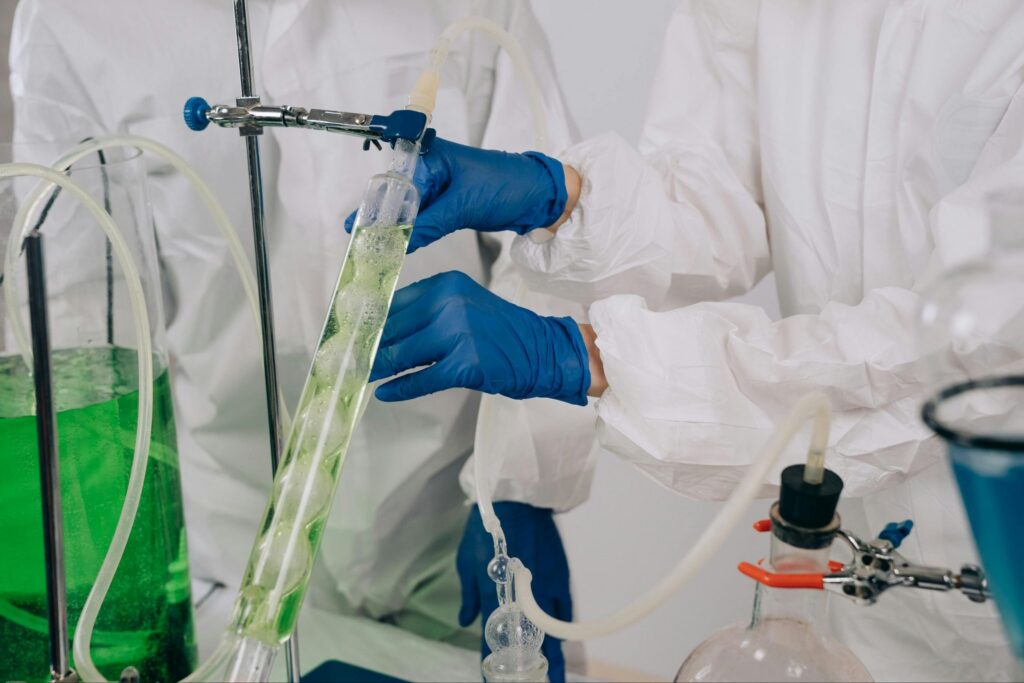
Liquid nitrogen sits at the intersection of two things biotech labs cannot afford to get wrong: sample integrity and supply continuity. A failed delivery or an undersized dewar does not just create an inconvenience. For a research institution managing irreplaceable cell lines or a fertility clinic storing patient samples, it is a catastrophic event.
This guide is for lab managers, procurement leads, and operations staff at biotech research facilities, biopharma operations, and clinical labs in the Bay Area who are either evaluating a supplier or thinking more carefully about what a reliable LN2 supply program actually requires.
What Liquid Nitrogen Does in Biotech Applications
Cryopreservation
Cryopreservation is the primary application. At liquid nitrogen temperatures, negative 196 degrees Celsius, cellular metabolic activity stops entirely. Cells, tissues, embryos, sperm, and other biological materials can be stored indefinitely without degradation when properly preserved in liquid nitrogen. This is the mechanism behind long-term cell line banking, gamete storage, and the preservation of patient-derived samples.
A foundational review in Nature Protocols on cryopreservation protocols for mammalian cell lines documents the temperature requirements and handling parameters that make liquid nitrogen irreplaceable for long-term biological storage, confirming that no other readily available cryogen achieves the sustained temperatures required for reliable sample preservation.
Vapor-Phase vs. Liquid-Phase Storage
Cryogenic storage tanks operate in two modes. Liquid-phase storage submerges samples directly in liquid nitrogen, providing the most consistent temperatures but creating cross-contamination risk if vials are not properly sealed. Vapor-phase storage holds samples above the liquid level in nitrogen vapor, maintaining temperatures cold enough for preservation while eliminating the contamination pathway.
For biological samples where contamination risk is a clinical or regulatory concern, vapor-phase storage is typically the standard. Both methods require a reliable LN2 supply, and vapor-phase tanks actually consume nitrogen at a higher rate because the constant vapor boil-off must be replenished to maintain the required temperature.
Cold Chain Transport
Dry shippers, which are dewars pre-charged with liquid nitrogen, allow biological samples to be transported at cryogenic temperatures without liquid present in the container. The absorbed LN2 releases vapor that maintains the required temperature for the duration of transport. These are widely used for tissue sample transfer, embryo transport between IVF clinics, and distribution of cell line materials.
Snap Freezing and Flash Freezing
Research labs use liquid nitrogen for rapid sample freezing to preserve enzyme activity, protein structure, and molecular markers that would be altered by slower freezing methods. This is standard in proteomics, genomics, and any molecular biology application where sample integrity depends on fast temperature drop at the time of collection.
Purity Grades for Biotech Applications
Not all liquid nitrogen is produced to the same purity specification, and the distinction matters more in life sciences than it does in most industrial applications.
Biotech-grade liquid nitrogen must meet USP (United States Pharmacopeia) or equivalent standards for moisture and contaminant content. The primary concern is oxygen concentration: high-purity LN2 is produced with oxygen content controlled to prevent oxidation reactions that could affect sensitive biological materials or create enriched-oxygen conditions in the storage environment. A supplier serving life sciences and clinical accounts should be able to provide documentation of the purity grade for each delivery.
Dewar Sizing and Supply Frequency
Getting the dewar size and refill cadence right is the operational variable that most labs underestimate before they have gone through a supply disruption.
Small Dewars (Under 50L)
Bench-top dewars in the 10- to 35-liter range are common for active use, snap freezing, and short-term sample handling. They have high evaporation rates relative to their volume and require more frequent refills. For labs that use liquid nitrogen daily, small dewars create a high-touch supply relationship unless they are replenished on a scheduled basis.
Storage Dewars (50L–500L)
Cryogenic storage tanks in the 50- to 500-liter range are designed for minimal boil-off and longer hold times. These are the workhorses of cell line banking, embryo storage, and long-term sample repositories. A 500-liter storage dewar with a properly maintained insulation jacket can hold LN2 for months with minimal loss, but it requires scheduled monitoring and top-offs to stay within safe operating level ranges.
Bulk Supply for High-Volume Operations
Biopharma operations, large research institutions, and IVF clinics with high storage volumes often run bulk LN2 supply arrangements with scheduled deliveries on a weekly or biweekly cadence. Bulk supply reduces per-unit cost and removes the manual reorder cycle from the lab workflow.
Not sure what dewar size or delivery frequency your facility needs? Request a quote and we’ll help you build a supply plan around your storage requirements and usage patterns.
Supply Continuity and What Can Go Wrong
The consequences of an LN2 supply failure in a biotech context are categorically different from most industrial gas shortages. A single missed delivery to a cell banking operation can compromise samples that took years and significant expense to develop. IVF clinics face patient-care and regulatory implications that extend well beyond the operational inconvenience.
Supply continuity planning for biotech LN2 accounts involves:
- A supplier with documented delivery reliability, not just average on-time performance
- Same-day or next-day emergency delivery capability for unplanned shortfalls
- Minimum-fill guarantees that prevent partial deliveries during periods of constrained supply
- A dedicated account contact who knows your operation and can communicate proactively when supply chain issues arise
AdChem and the Bay Area Biotech Market
The Bay Area hosts one of the densest concentrations of biotech, biopharma, and life sciences operations in the country. AdChem serves research institutions, clinical labs, and biopharma operations across the region with liquid nitrogen in the purity grades and formats that life sciences accounts require.
Distribution hubs in the East Bay and Los Angeles support same-day delivery throughout California, with the scheduling flexibility to align deliveries with lab operations rather than standard industrial delivery windows.
For operations that require scheduled recurring accounts, the team works with lab procurement to build a delivery cadence around your actual storage and consumption patterns.
Contact AdChem to discuss LN2 supply, purity documentation, and delivery scheduling for your facility.